Everybody's Got a Story: Special Mid-Month Edition - #JusticeForJulie #TenYearNightmare
- Aug 19, 2016
- 6 min read
Over the last several weeks the Craven family have been downtown in Brantford; out front of the Superior Court, City Hall and have marched with signs around the downtown core. As the people stop to read the signs and inquire about the goings-on, they were often moved to tears, their mouths dropped in shock and twisted in disgust. Some offered prayers and their condolences, as Julie shared parts of her ten-year nightmare.
For most of us, events like that of March 18, 2006, are the kinds of things that happen in horror movies and nightmares. But for most of us, the movie ends, or we find peace when we wake. But ten years. That is 3650 days, 87,600 hours, and 5,256,000 minutes. We’ve all seen the quote that reads, “How long is forever? Sometimes just one moment.”
Julie Craven was married to Andrew Osidacz, the man who would later murder their son, Jared. His control and outbursts had escalated, and she found herself in a highly abusive relationship where his mind games, manipulation, and force was endured daily. This led to a brutal attack, which put him in jail, and a restraining order was put in place. Craven asked for supervised visits because she was fearful of her child’s wellbeing, but the evidence showed that Andrew had been abusive toward only Julie, never directly abusive toward Jared; his wellbeing to them was not at risk. For Julie Craven and her family, this is only the prologue. Her nightmare would continue, blow after blow for years to come.
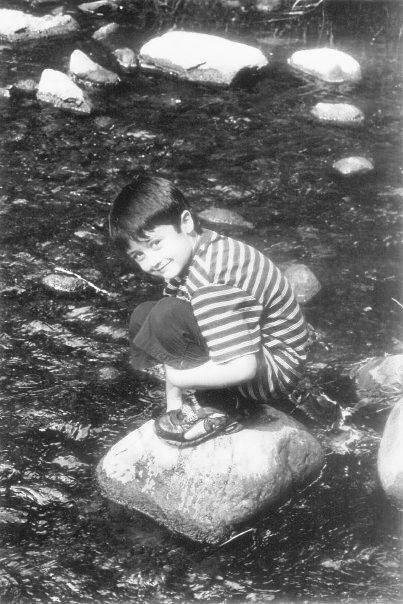
Craven recalled to me, she was tired; it had been a long day. All she wanted was to lie down and read a little before bed. She was between sleep and wake when it began. Andrew broke down her door, held her at knifepoint and told her, while drenched in blood, that he had killed their son. For about an hour, she was held hostage; beside herself, in complete shock and despair, clinging to the idea that her son was only injured somewhere, and refusing to give up hope. The police, having been to the residence where the murder had taken place, arrived while he continued to hold a knife to her throat. He was shot four times, tumbling them both into the bathtub, killing her husband. Her hope for her son’s life was taken shortly after, the police had told her that he was being taken to the hospital to be worked on, what they had meant was the morgue. This would be the night that would forever change the lives of the families and friends involved, and would send a grieving mother down a path no one could ever predict having to face.
As if having to go through something, even with minuscule similarity, would be a lifelong healing process of its own; your reaction in these times is not all that is expected of you. Your action is needed, and when trying to process such inconceivable events, it can be next to impossible. In the ten years since her son’s murder, the court cases have dragged on, and have yet to see a settlement or a trial. Craven is suing for the wrongful death of her son and damages for the assault on her. The matrimonial home where she had raised her son was put into the killer’s estate, as it was in his name, forcing her from her home. “Support payments” were taken out of the estate for Julie, which she did not even want to fight for; she just wanted to finally reach a trial, but she was assured that dealing with one thing would lead to dealing with another and it was arranged that she would sign over each support payment to her lawyer’s firm. The estate was to be frozen until a trial or settlement was reached, but this did not occur. Instead, the family of the killer withdrew $80,000, to cover their legal fees in the fight to keep Julie from receiving any, and the firm representing her removed $71,000. This has left the estate in question next to depleted over the ten year battle, meaning she’s facing essentially fighting for nothing, and will be left, in fact, owing amounts outside of her reach. Craven is fearful of what life in her older age will look like without the support of her parents, and her inability to work.
During this lengthy time, creation of a website, which was deemed by the courts as deliberate prolonging of the mother’s suffering, where poetry glorifying her son’s killer was posted, and disgusting and hatful things were said about Julie and her family. The court proceedings for the website alone lasted from August 2007 until April 2015, resulting in the website to be taken down and a rare publishing ban on Andrew’s former brother-in-law.
After the proceedings regarding the website were resolved and it was taken down, an order was made for Craven to be paid $60,000 in reparations, in addition to covering the $40,000 in court costs. However, one cannot get blood from a stone, and so no payment was received. Yet, somehow Julie is now facing the trial that has been so long awaited, in October of this year, but is facing having to self-represent, as she is still on the hook for the $58,000 for the court costs not paid from the website case.
When we face such tragedy and devastation we put our trust in our lawyers and in our court system to serve the due justice, to explain the things we cannot put in politically correct terms, to make decisions about what we should accept, and how things should move forward. And, as blessed as we are here in Canada for our legal system, no thing is without flaws. The Craven family and those who have heard the story, feel like this should have been, if not an open and shut case, resolved long before. Her husband murdered her son. Several of the pretrial judges are remembered to have remarked that this should have ended long ago, and that Julie is entitled to the estate. It would appear that parts of the legal system, where we turn in these times, might be more concerned with money matters, rather than morals.
Now, as awful as having to go through all of this is, these are not the only factors that Julie now faces. Aside from legalities, there are also mental, emotional, as well as some physical trauma she has had to endure. She was diagnosed with severe P.T.S.D., inhibiting her ability to find employment. While living now with her elderly parents, feeling her life destroyed, and depleting what funds they have had available, Julie now fears that an end to this is not in the near future. At this time, the family is asking for community support through the human connection. Not through funding, but rather through the people, in hopes that someone will hear their story and will be able to help direct them with what steps should be taken to reach a clearer future. The Craven Family knows that closure is something they will never get, that the scars will never fully heal, but what would bring this family some shred of peace, would be the due justice for all they have had to endure for more than a decade. The family is drained: mentally, physically, and financially. And, although they will never be able to put the nightmare to bed fully, they would like to be able to feel the slight weight that would be relieved from finally being able to say that court is resolved and that they have felt some justice.
You may not feel like you are able to help, but by sharing this interview you may just get this message in front of the right person, who may be able to help. And, by coming out to show your support at 70 Wellington – out front of the Superior Court – by Victoria Square Park, Brantford, ON. Fridays and Wednesdays between 9:45 – noon you will be showing this family that they are not in this alone. None of us can predict the unpredictable, this could very easily be any one of us facing tragedy and needing justice. There is power in numbers, this we know, what they need to know is that this is not how we treat a mother who’s son has been murdered.


Comments